Ingredients
Nettle Leaf in Your Daily Prostacyl Serving: Root vs Leaf
Each daily serving of Prostacyl, two capsules, includes 50 mg of nettle leaf extract, while the prostate research on nettle used the root. The two parts hold different chemicals and have different traditional uses. Check the plant part on any label you compare. Compare the leaf and root forms of the plant, since each part can carry a different mix of plant compounds.
Written by the Prostacyl editorial teamUpdated · 8 min read
The short answer
Is the nettle in Prostacyl root or leaf?
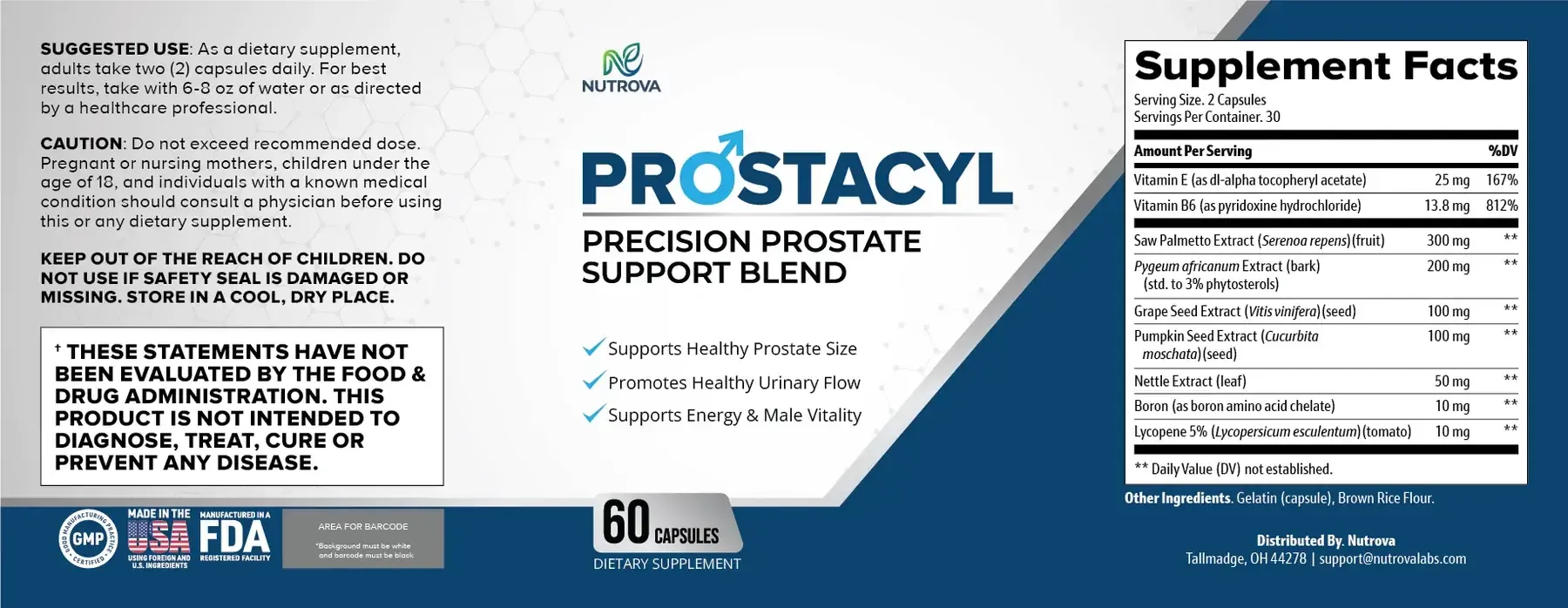
It is leaf. The Prostacyl label lists "Nettle Extract (leaf)" at 50 mg per two-capsule serving.
That detail matters more than it looks. When stinging nettle is studied for the prostate, researchers almost always use the root. WebMD notes that most research used roots, and that leaves and flowers contain different chemicals (WebMD: Stinging nettle).
So a buyer who reads "nettle" and thinks of prostate studies is thinking of a different part of the plant. Our nettle leaf ingredient page covers the 50 mg dose in detail.
Side by side
How do nettle root and nettle leaf compare?
Root and leaf come from the same plant, Urtica dioica, but they are used, studied and sold for different jobs.
| Point | Nettle root | Nettle leaf |
|---|---|---|
| Part of the plant | Underground root | Above-ground leaves and stems |
| Main use by mouth | Urinary symptoms of an enlarged prostate (RxList: Stinging nettle) | Joint pain (osteoarthritis) and hay fever (RxList: Stinging nettle) |
| Prostate research | Small, mixed trials, some up to 24 months | Not published |
| Chemistry | Different chemical profile | Different chemicals from the root (WebMD: Stinging nettle) |
| Studied prostate dose | Varies by product | Not published |
| In Prostacyl | None | 50 mg extract per serving |
The root
What has nettle root been studied for?
Nettle root was studied for the urinary symptoms of BPH, and the results are mixed. RxList rates the evidence as insufficient, with contradictory findings (RxList: Stinging nettle).
Root products taken for up to 24 months may ease symptoms, RxList says, but they did not improve urine flow or force. A combination of nettle root and saw palmetto seemed comparable to finasteride in one comparison. WebMD sums up the benefits as small, with the comparison to prescription drugs unclear (WebMD: Stinging nettle).
One more point is easy to miss. RxList's pygeum monograph says adding stinging nettle to pygeum does not appear to improve BPH symptoms (RxList: Pygeum). Prostacyl pairs both, along with pygeum at 200 mg.
Every study above used root preparations. None of them tells you what a leaf extract does for the prostate.
The leaf
What is nettle leaf used for?
Nettle leaf is mainly taken for joint pain and seasonal allergies. RxList lists osteoarthritis and hay fever as its uses by mouth, not prostate symptoms (RxList: Stinging nettle).
We found no published prostate trial of nettle leaf and no studied prostate dose for it. The 50 mg in Prostacyl therefore has nothing to be measured against. That is different from saying it is unsafe; it simply has no prostate data.
On the label
How do you check the nettle part on a supplement label?
Find the nettle line
Look in Supplement Facts for "nettle" or "Urtica dioica".
Read the brackets
The plant part sits in brackets: root, leaf, or aerial parts.
Match the claim
A prostate claim with a leaf extract borrows root research.
Check the amount
A printed amount can be compared. A blend total cannot.
Why it matters
Why does the plant part matter on a supplement label?
Because evidence only carries over when the product matches what was tested. The FTC's 2022 guidance says a product should match the dose and form used in the research behind a claim (FTC: Health Products Compliance Guidance).
Root and leaf are not two sizes of one ingredient. They are closer to two ingredients that share a name. Quoting root trials to sell a leaf extract would be like quoting a trial of one medicine to sell another.
To its credit, the Prostacyl label states "leaf" openly rather than hiding the part. That honesty lets you make the call. Our full Prostacyl label shows the other eight amounts the same way.
Medicines
Which medicines interact with stinging nettle?
Nettle can interact with several common medicines. RxList lists moderate interactions with lithium, diabetes drugs, blood pressure drugs, sedatives and warfarin (RxList: Stinging nettle).
Water-pill effect
Nettle may act like a mild diuretic, which can raise lithium levels.
Low blood sugar
Nettle may lower blood sugar, adding to the effect of diabetes medicine.
Low blood pressure
Nettle may lower blood pressure, adding to the effect of these drugs.
Vitamin K
The vitamin K in nettle may weaken warfarin's effect.
Prostate medicines
WebMD urges caution with tamsulosin, doxazosin and alfuzosin (WebMD: Stinging nettle).
Water pills
WebMD advises caution when nettle is combined with water pills.
If you take a blood thinner, lithium, or a diabetes, blood pressure or prostate medicine, ask your doctor or pharmacist before taking Prostacyl.
Safety
What side effects can nettle cause?
Nettle side effects are usually mild: upset stomach, sweating, and constipation or diarrhea. Severe allergic reactions are rare (RxList: Stinging nettle) (WebMD: Stinging nettle).
RxList calls nettle possibly safe by mouth for up to two years, and likely unsafe in pregnancy. Prostacyl's label tells anyone with a known medical condition to consult a physician first.
The other ingredients bring their own cautions, such as the vitamin B6 at about 8 times the RDA. See our Prostacyl side effects page for the full list.
Bottom line
Should the nettle leaf in Prostacyl change your decision?
It should lower your expectations for that one ingredient, not settle the whole question. The 50 mg of leaf is a small share of the formula, and it has no prostate data either way.
- Expect nothing prostate-specific from the nettle leaf.
- Weigh the pygeum, which sits inside its studied range.
- Count nettle in your medicine check.
- Get urinary symptoms checked by a doctor before you self-treat.
FAQ
Nettle root and leaf FAQ
What is the difference between nettle root and nettle leaf?
Nettle root is the underground part and was studied for urinary symptoms of an enlarged prostate. Nettle leaf is the above-ground part and is used for hay fever and joint pain (RxList: Stinging nettle). They hold different chemicals, so results from one do not apply to the other.
Is stinging nettle safe to take for a long time?
RxList calls nettle possibly safe by mouth for up to two years, with upset stomach and sweating as the usual side effects (RxList: Stinging nettle). Longer use has not been well studied. It is likely unsafe in pregnancy, and anyone on regular medicine should check with a pharmacist.
Does stinging nettle root help BPH symptoms?
Possibly a little. RxList rates the evidence as insufficient: root products may ease symptoms but did not improve urine flow, and results conflict (RxList: Stinging nettle). Talk with a doctor about proven BPH options.
Is stinging nettle safe with alpha-blockers like tamsulosin?
Ask your doctor first. WebMD advises caution when nettle is combined with alpha-blockers for BPH, such as tamsulosin, doxazosin or alfuzosin (WebMD: Stinging nettle). Your doctor should know about every prostate product you take.
Does nettle work like a water pill?
It may have a mild water-pill effect. RxList says this diuretic-like action can raise lithium levels, and WebMD advises caution when nettle is taken with diuretics (RxList: Stinging nettle) (WebMD: Stinging nettle). If you take a water pill or lithium, check with your doctor before adding nettle.
How much nettle is in one Prostacyl serving?
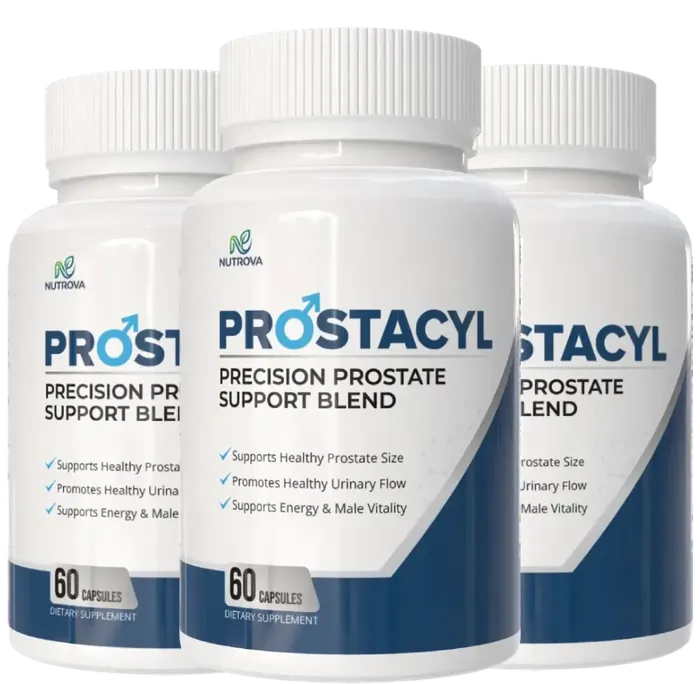
One serving of two capsules has 50 mg of nettle leaf extract. A bottle holds 30 servings, so it supplies 1,500 mg of leaf extract across a month.
Does Prostacyl use nettle root or nettle leaf?
Prostacyl uses nettle leaf extract at 50 mg per two-capsule serving. The post notes that the prostate research it covers was done on nettle root.
Why does the plant part matter in Prostacyl nettle?
Root and leaf hold different chemicals. The post says root is used for urinary symptoms and leaf for hay fever and joint pain, so studies on one do not carry over to the other.
Is the nettle in Prostacyl leaf or root extract?
The label lists 50 mg of nettle leaf extract. Most prostate research on nettle used the root, so compare plant parts when reading labels.
How many Prostacyl capsules contain the nettle each day?
The 50 mg of nettle leaf extract is part of one serving of two capsules, which adults take daily.
Who wrote this
Written and reviewed by
Plain-language pages built from the bottle label, the order page and linked public health sources such as NIH, FDA and CDC.
Last updated . Read our editorial standards and how we check reviews. This website is run by a USA authorized Prostacyl retailer, not by the manufacturer. We earn money when you buy through our order links.
Keep reading
More about Prostacyl
Nettle leaf
The label's nettle is leaf, while prostate research used the root, and nettle interacts with several common medicines.
Read moreIngredients
All nine Prostacyl ingredients, each printed amount set beside the dose research used, with a plain verdict.
Read more
Side effects
Ingredient side effects, blood thinner and nettle interactions, B6 nerve signs and the urinary signs that need urgent care.
Read moreUSA Authorized Prostacyl Retailer
Ready to try Prostacyl?
Pick a pack. Two capsules a day; one bottle lasts 30 days.
- Secure checkout
- 60-day money-back window
- Free U.S. shipping on 3+ bottles